
Local Deck Contractors | Garage Builders Maine
We build new decks, replace old ones, install composite decking, and handle stairs and cable railing across Central Maine. The owner walks every site before drawing a design.
- 6Years building across Central Maine
- 100+Garages sold and planned
- 1Owner who walks every job
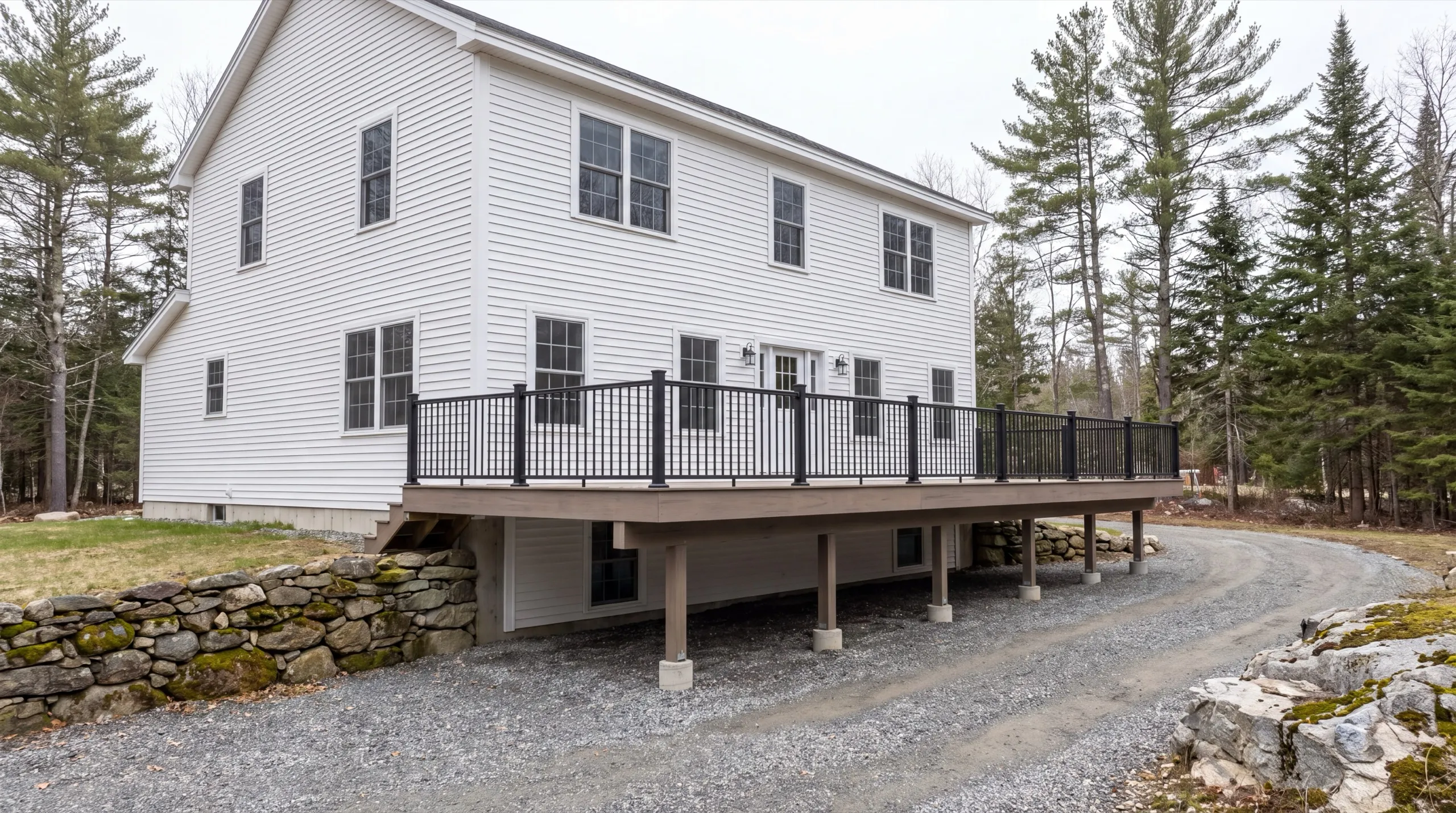
A deck contractor builds new decks and replaces old ones for homeowners across Central Maine, from Augusta and Waterville to Gardiner, Winthrop, and Wiscasset. The big thing here is the ground: footings have to reach Maine's frost depth so the deck doesn't heave and shift over the winters. Garage Builders Maine pours to that depth every time, and the owner checks the depth himself.
We build in wood or composite, and we tell you straight what each one really costs over the long run instead of just the price today. Both go in to code, not just to look right the day it's done.
If your current deck is rotted or unsafe, we handle the replacement as its own scoped job so nothing gets rushed or missed. The owner walks every project in person before we design or tear anything out, and you get a clear answer on cost and timeline.
Why do homeowners choose us for deck building?
Homeowners hire us because we spend money where they cannot see it. The frame and footings decide whether a deck will still be solid in fifteen years.
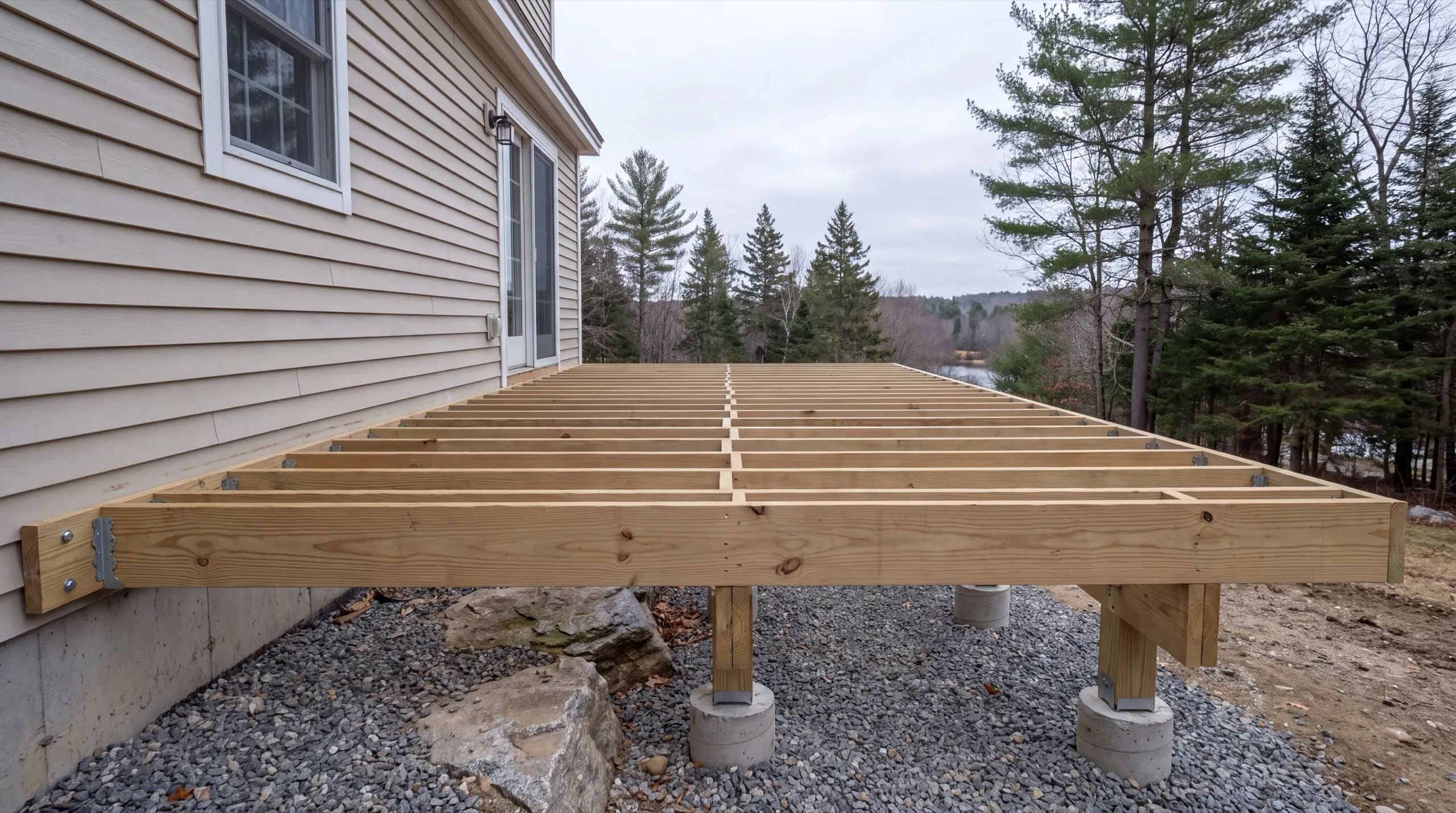
- Helical piles driven to Maine's 4-foot frost depth, never floating deck blocks
- Joist tape or a rolled-on frame coating on every joist we set
- Wood or composite priced honestly against what each really costs over twenty years
What homeowners say
We contracted to build our retirement home. Our schedule required that we needed to move in by a certain date, so the planning and execution needed to be precise.
Overall, the experience was overwhelmingly positive, marked by consistently excellent communication.
Went above and beyond from start to finish.
What else do we build in Central Maine?

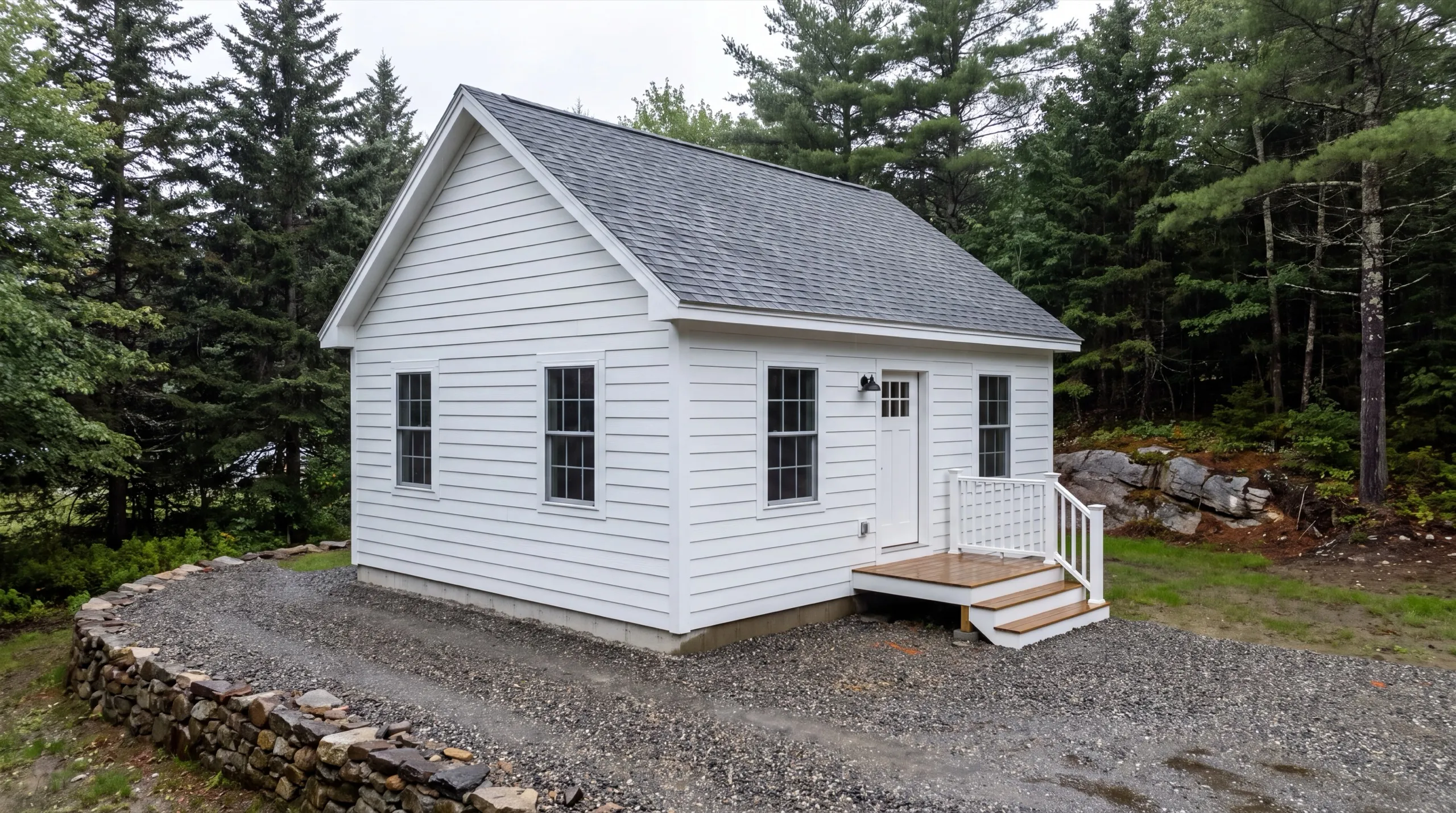
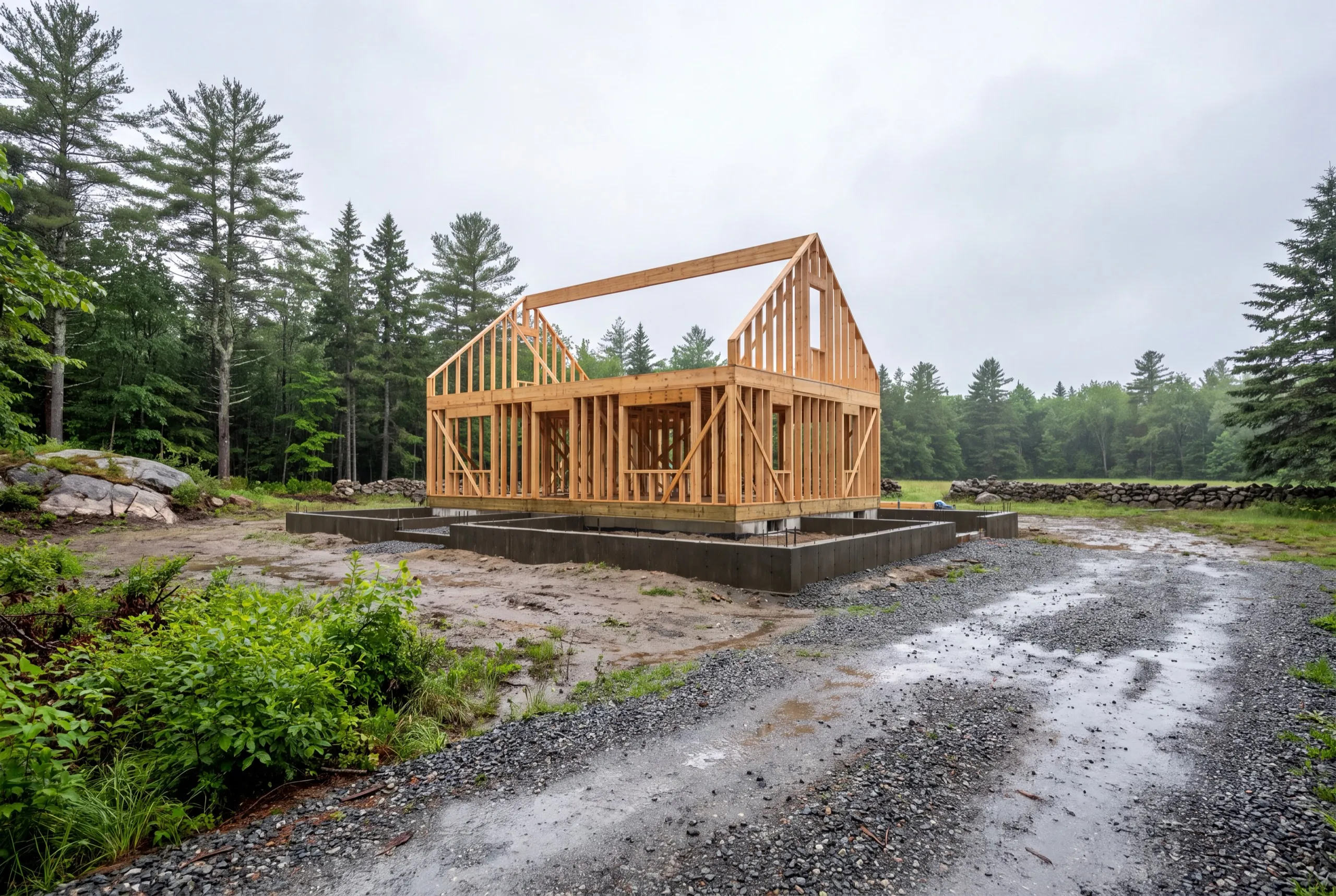
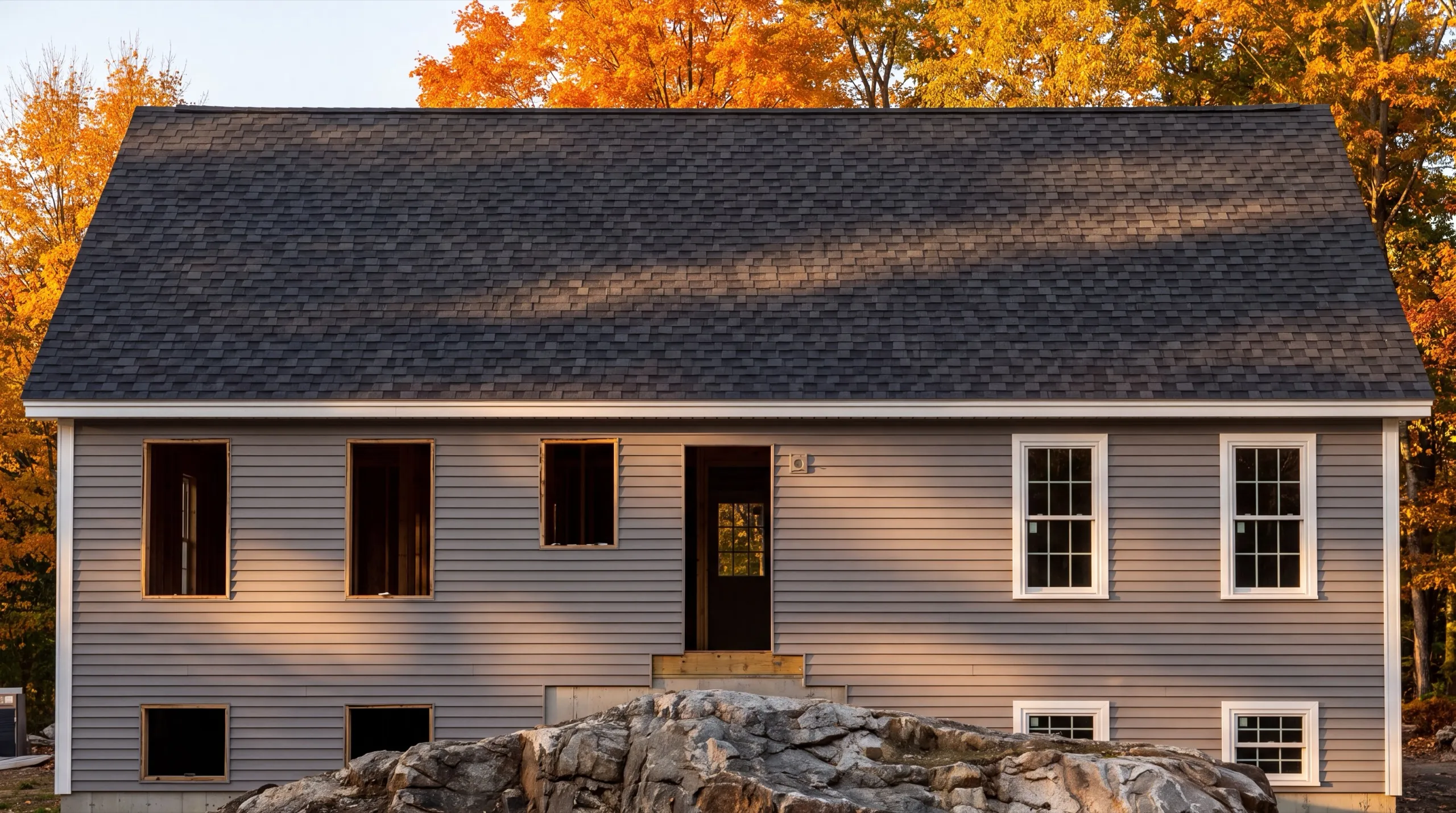
Where is our shop?
Our shop in Augusta, ME
219 Capitol St. Ste. 8Augusta, ME 04330
What Types of Decks Do We Build?
Wood Deck Construction and Replacement
Pressure-treated wood makes sense for a tight budget or small footprint. It’s the wrong choice if the staining will never happen. With regular upkeep, a wood deck lasts about twenty years here. Neglect it and boards may start failing by year eight. Then comes the patchwork. Either way, we build it properly, using oversized framing and taped joists with a flashed ledger. See how that works town by town in Gardiner or Litchfield.
Composite Deck Construction and Replacement
Composite is better for the large majority of Maine homes. It isn’t close. It handles the freeze-thaw cycle without requiring an annual stain job. We start with TimberTech and AZEK PVC. We use Deckorators mineral-based composite when color decides the job, while Trex is reserved for homeowners matching an existing deck. The case for composite is strongest in the lake towns, including Winthrop and Manchester.
Deck Extensions, Additions, and Upgrades
Extending a deck sounds cheaper. Nine times out of ten, we still recommend replacing the frame beneath it. Framing is the least expensive part of a deck. Putting composite boards on twenty-year-old joists is the shortcut that reliably makes you pay twice. Rail swaps and wider landings are worthwhile projects on their own. So are new stair runs. Most finish inside a week.
What Deck Services Do We Offer?
We handle the build from the first layout sketch through the last stair tread. One crew. Nothing gets handed to a second outfit halfway through.
- Deck design and layout planning
- Footings and framing
- Wood deck construction and replacement
- Composite and PVC deck construction and replacement
- Railing installation
- Stairs and landings
- Deck extensions and additions
- Multi-level and raised decks
Even one item from that list can be a job worth doing. A stair run that has gone soft shouldn’t wait until spring.
What's our process to building a deck?
Get your free estimate.
We walk the site, look under whatever is standing, and talk material before a number is written down.
We build it.
Piles, frame, decking, railing, and stairs, with the permit filed and its fee already inside your estimate.
Final review.
You put weight on it, shake the railing, and tell us what you want changed before we close it out.
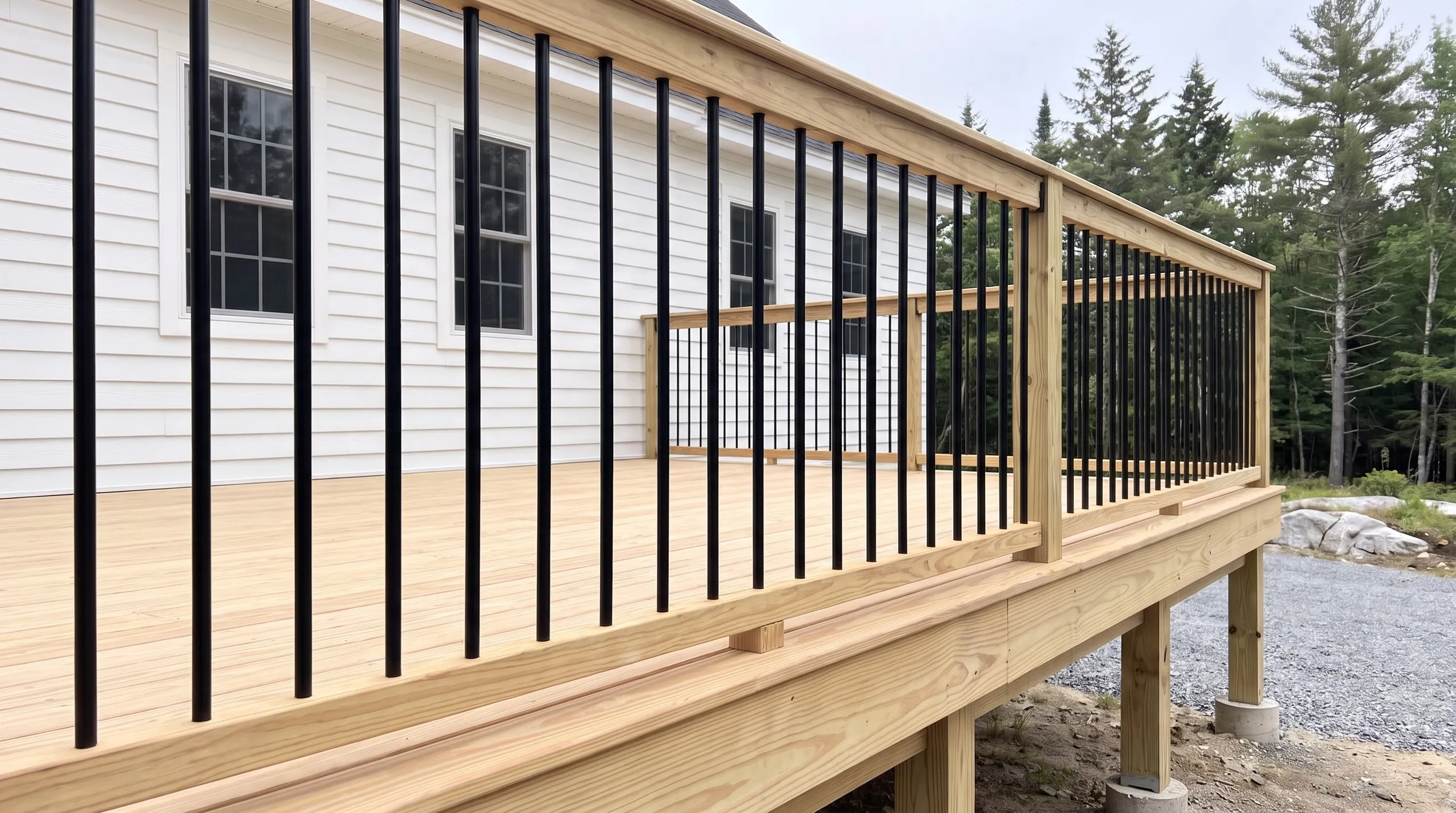
Is It Time to Replace Your Existing Deck?
Replace an existing deck once dangerous boards require repeated swaps. The patchwork is the tell. The deck has reached the end of its useful life, not a rough patch.
By about twenty years, a wood deck is done. The boards show the damage, but the cause is usually underneath, where unprotected joists take on water or posts stop above frost depth.
Isolated damage is different. One bad board or loose rail bracket can be repaired. A single stringer can too, and we’ll say so instead of quoting a full rebuild.
A repair becomes a replacement when the frame is involved. Soft joists and an unflashed ledger are structural problems. So are footings that have moved. New decking won’t fix any of them.
What Should You Look for in a Deck Contractor?
The first thing to look for in a deck contractor is a straight answer to this one. The best decking material for most Maine homes is PVC composite, specifically TimberTech or AZEK. It holds up to the freeze-thaw cycle without the yearly staining pressure-treated wood demands, and the maintenance you skip compounds every year you own it. Wood is still the right pick on a tight budget or a deck under about 150 square feet.
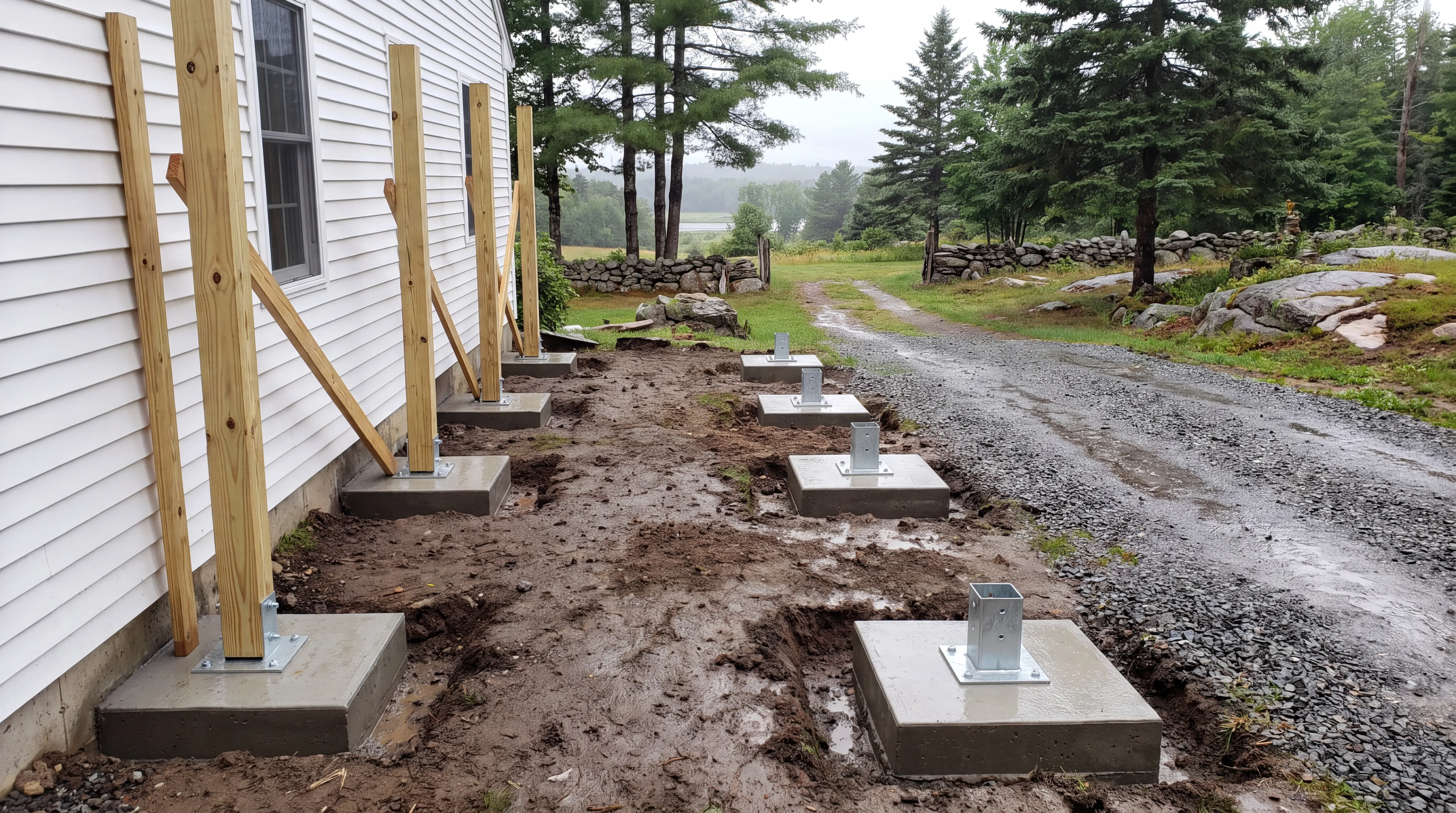
Deck footings in Maine go to four feet, the same frost depth a house foundation answers to, because deck posts fall under the same requirement. We set helical piles on nearly every job, which a sub installs in about an hour, and we pour a concrete pier only where the situation calls for it. We will not build on floating deck blocks.
Because framing is the cheapest part of a deck and the most expensive thing to redo. Putting new composite on top of joists that are already twenty years old means the surface outlives the structure holding it up. We say no to this nine times out of ten, and the tenth is a frame we would have built ourselves.
Joist tape goes on every joist so water sheds off the frame rather than sitting in it. FastenMaster's Deck Frame Coating is the faster equivalent, a water-based roll-on that is workable in about twenty minutes and covers roughly 450 linear feet of 2x per gallon. Either way, the frame gets a water barrier before a board goes down.
A multi-level deck steps down a grade instead of forcing one long staircase, which is why it suits a sloped Maine lot. The cost driver is height rather than levels: past roughly two feet off the ground, staging adds about one crew day, and that day is a much bigger share of a small job than a large one.
Westbury aluminum and Westbury cable railing are our first picks, because they last and because cable gives back a view a picket rail has been chopping up. TimberTech Radiance Rail and TimberTech classic composite are the alternatives when the rail should match the decking.
Yes, on an exposed second-story frame where the structure is visible. Owens Corning Lumber for Deck Framing is a rotproof fiberglass composite that runs about five times pressure-treated cost, and ProWood TrueFrame joists are kiln-dried after treatment and planed straight, which is a smaller premium for a real gain in straightness.
How much does it cost to build a deck in Maine?
Building a deck in Maine costs about $8,000 for a small pressure-treated deck and $40,000 or more for a large multi-level composite build. Those bands are averages from many quotes, not a price list.
| Deck size | Material | Estimated range* |
|---|---|---|
| 200 to 300 sq ft | Pressure-treated wood | $8,000 to $15,000 |
| 200 to 300 sq ft | Composite | $14,000 to $24,000 |
| 300+ sq ft, multi-level | Composite, stairs and railing | $24,000 to $40,000+ |
Square footage, decking material, railing style, stairs, and height or complexity are what move a job inside these ranges.
Why do small decks cost more per square foot?
Because footings are close to a fixed cost. A 10 by 10 pressure-treated deck with stairs and six footings prices out around $100 to $120 per square foot, while a 12 by 16 in the same yard would have cost only about a thousand dollars more in total. Building bigger is the cheapest square footage most homeowners will ever buy.
Who is actually running your job?
Seth Leichnitz owns this company and started in the trade doing the physical work himself. He went through Kennebec Valley Community College's sustainable construction program from 2018 to 2020, then spent years framing, managing, and estimating before starting Garage Builders Maine. He checks footing depth himself, inspected or not.
Frequently asked questions
You almost always need a permit for a new deck in Maine, and most towns we serve keep the process simple. A same-footprint replacement is usually a form and a fee. A few towns set the permit fee as a percentage of total project price, which becomes a real line item on a large deck, so we build the fee into the estimate rather than surprising you with it.
For most homeowners in this market, yes. Composite costs more the day it goes down and less every year after, because it avoids the recurring staining and sealing pressure-treated wood needs to survive the freeze-thaw cycle. The exception is a small deck or a firm budget, where wood is the honest answer.
Most decks run one to three weeks on site once the permit is in hand. Helical piles go in inside a day. Stairs, railing, and trim take longer than homeowners expect, because that is where the finish work lives.
Yes. We size the framing and the footings for the additional load during design, rather than discovering it after the frame is up. Tell us at the estimate, even if the tub is two years away.
Hidden clips are our normal method, because they leave a clean surface. On PVC we face-screw and plug instead, since PVC moves more than other boards and that is the correct practice for it. The finished deck still reads clean, and the fastening actually holds.
Trimming so no end grain shows, at minimum under the rim, in the same decking material rather than lattice. It costs real money and it is the difference between a deck that looks finished and one that looks nearly finished.
We build decks across twenty towns in Kennebec, Lincoln and Sagadahoc counties, from Augusta and Winthrop down through Gardiner and Richmond to Wiscasset. The town list above links to what a deck job looks like in each one, because permitting and site conditions genuinely differ from town to town.
Spring through fall is the build season, and earlier is better. Frost-depth pile work has to be finished before the ground freezes, so a project that starts in late October usually becomes a spring project, and we would rather say that than take a deposit on a promise.
Yes, and those jobs start with the shoreland zoning permit rather than the design. Most towns in our area require one within a set distance of the water, on top of the standard building permit, and the setback often decides where a deck can sit at all.
Looking for a Reliable Deck Contractor?
Send us the address. We’ll walk the site, get beneath whatever is standing now, and give you a straight number for materials and price.