
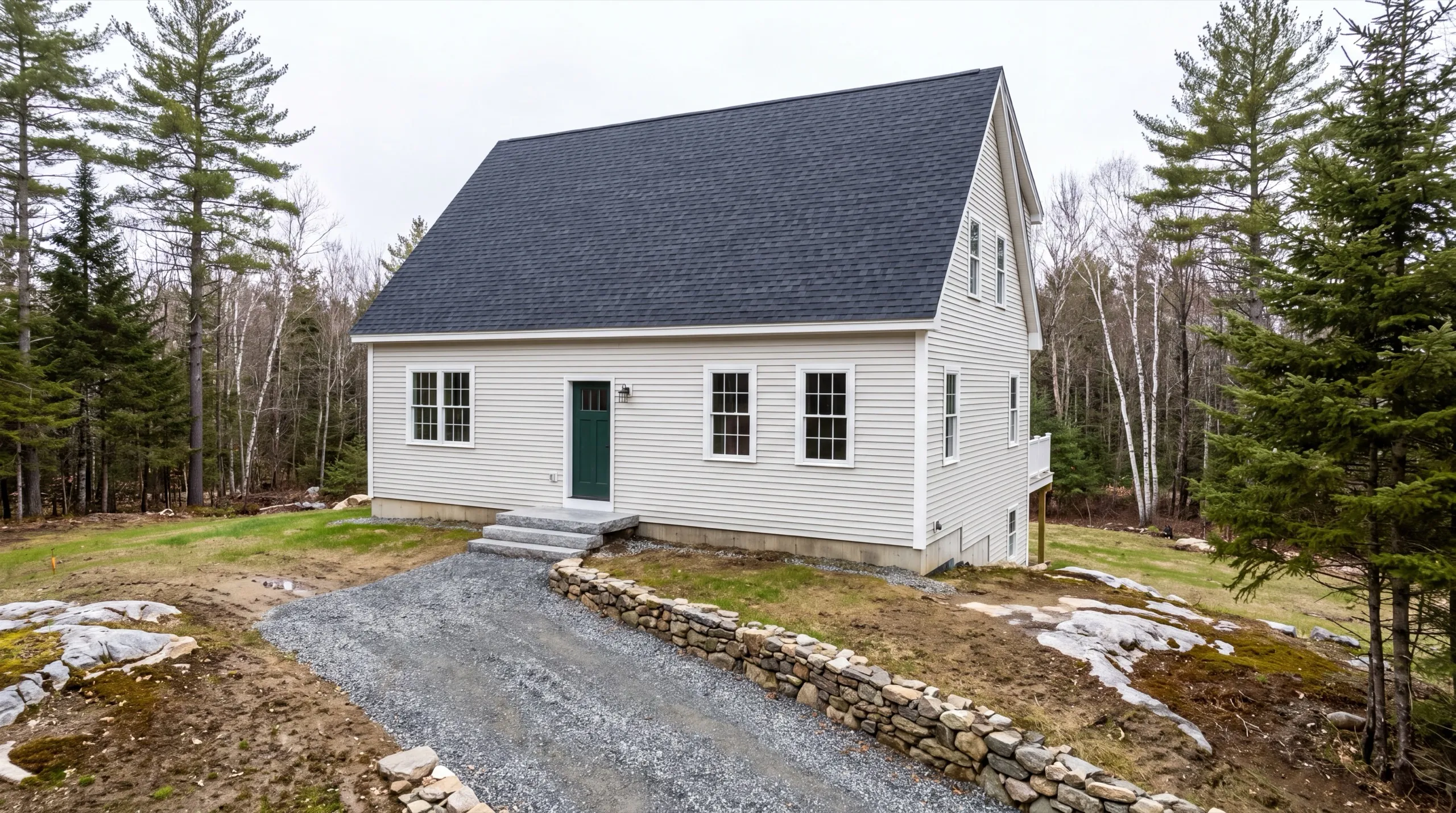
Trusted Siding Contractors | Garage Builders Maine
We replace siding and handle targeted repairs across Central Maine. Our work includes vinyl and fiber cement.
- 6Years building across Central Maine
- 100+Garages sold and planned
- 1Owner who walks every job
A siding contractor replaces or repairs the outer shell of your house: the siding itself, plus the house wrap and flashing that keep water out. Garage Builders Maine handles siding for homeowners across Kennebec, Lincoln and Sagadahoc County towns like Augusta, Waterville, Gardiner, Winthrop, and Wiscasset, working in vinyl, fiber cement, and wood.
We match the material to how your home actually sits: wind, sun, and moisture exposure, not whatever costs us the least to push. The house wrap and flashing get done right instead of rushed, because that layer is what stops rot behind the siding through our freeze-thaw winters.
The owner walks every project in person and inspects the moisture barrier work himself before we button things up. Full exterior or targeted repair, we look at it and give you a straight price and timeline either way.
Who are you hiring for siding work?
You are hiring an owner-run crew that spends your money on the layer you can’t see. House wrap and flashing decide whether a wall stays dry.
- New house wrap on every job, never the old wrap patched and reused
- Flashing at every window head, corner, and roof-to-wall junction, in the correct sequence
- Material recommended for your home's actual exposure rather than a default answer
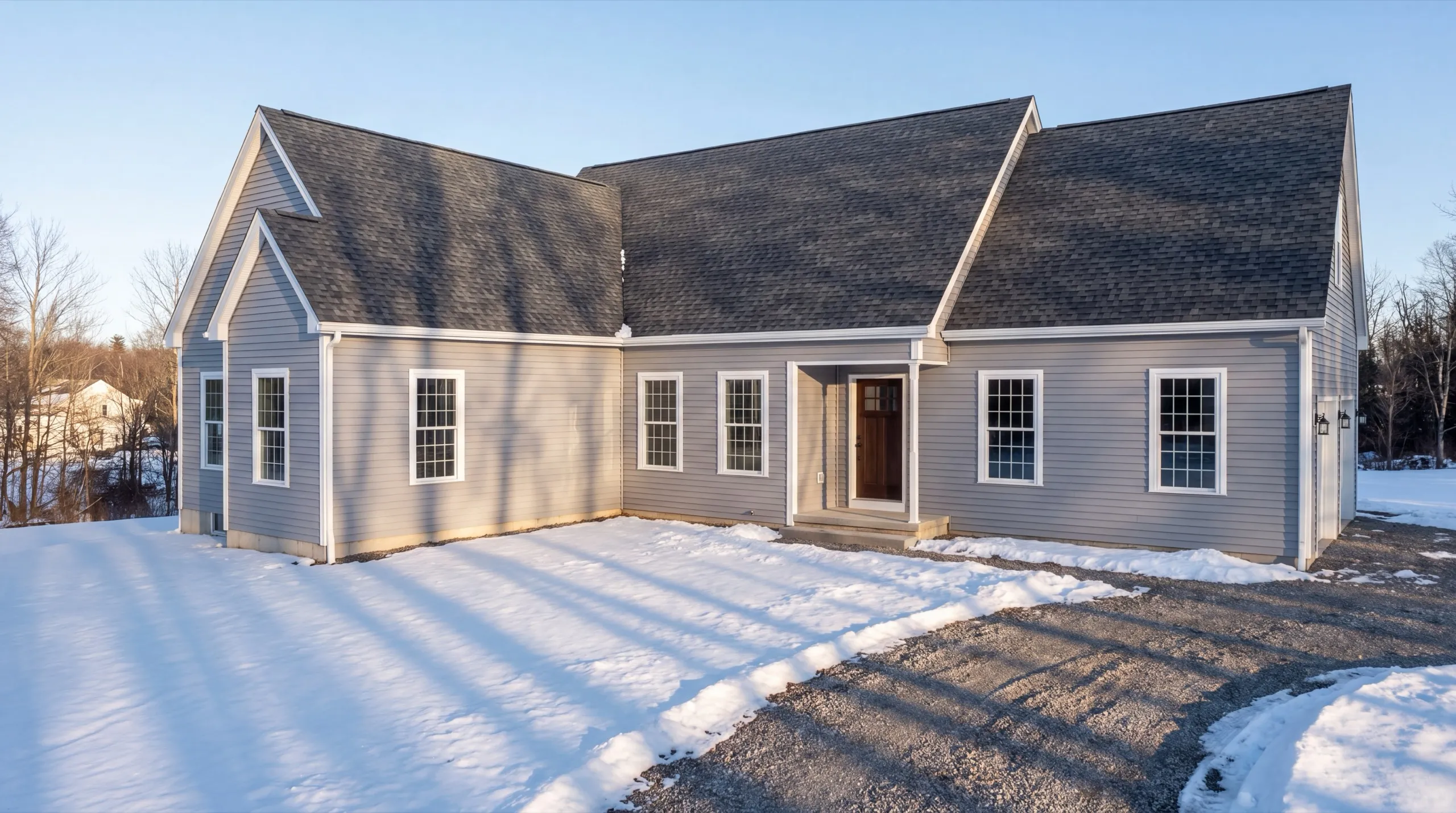
What homeowners say
Did a great job expanding my one car garage to a two car garage. They did exactly what I wanted, and then some.
Very quick, efficient, and enjoyable to work with. Everyone was so friendly, and I was so pleased with the way it came out.
Did an amazing job on our new bathroom remodel.
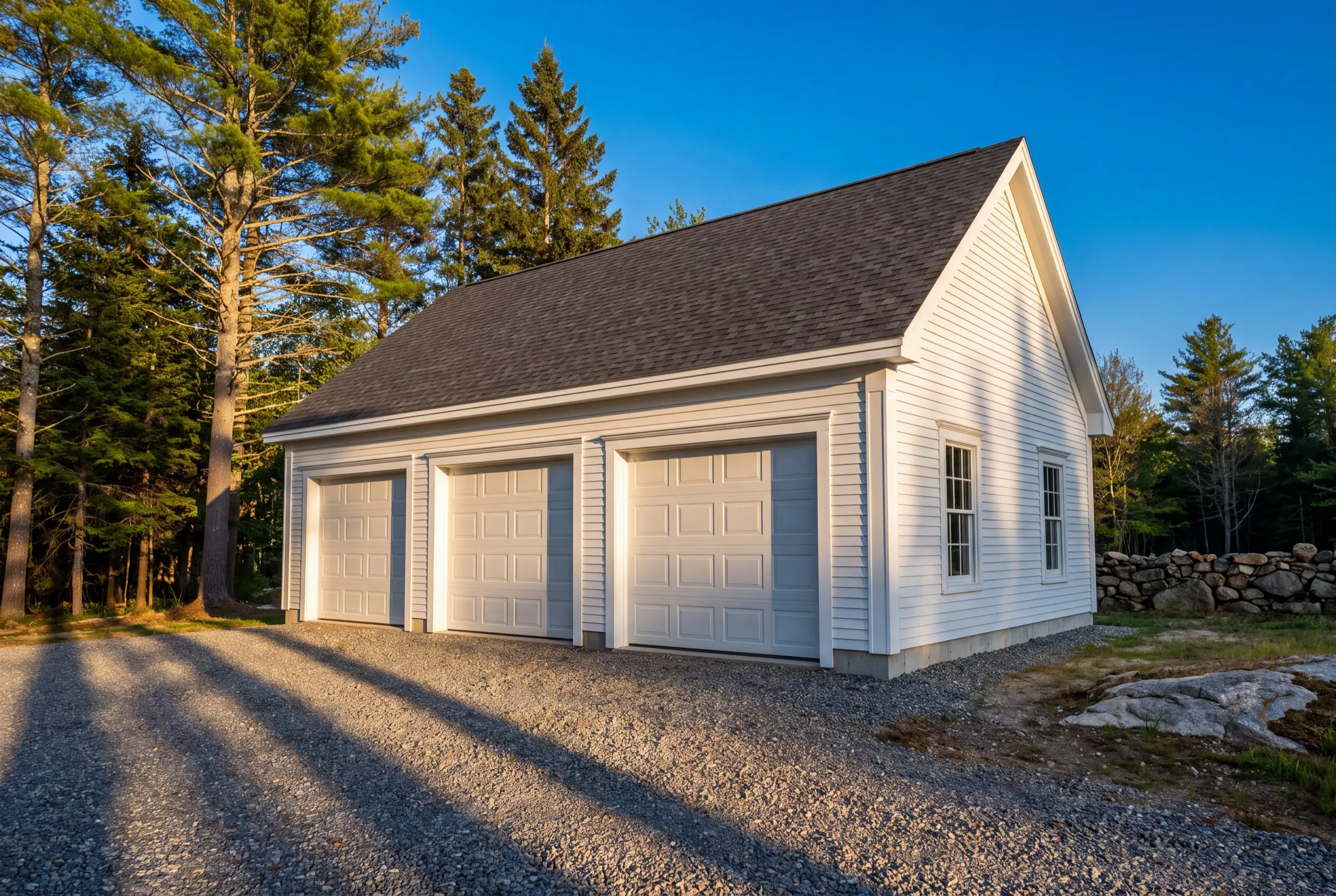
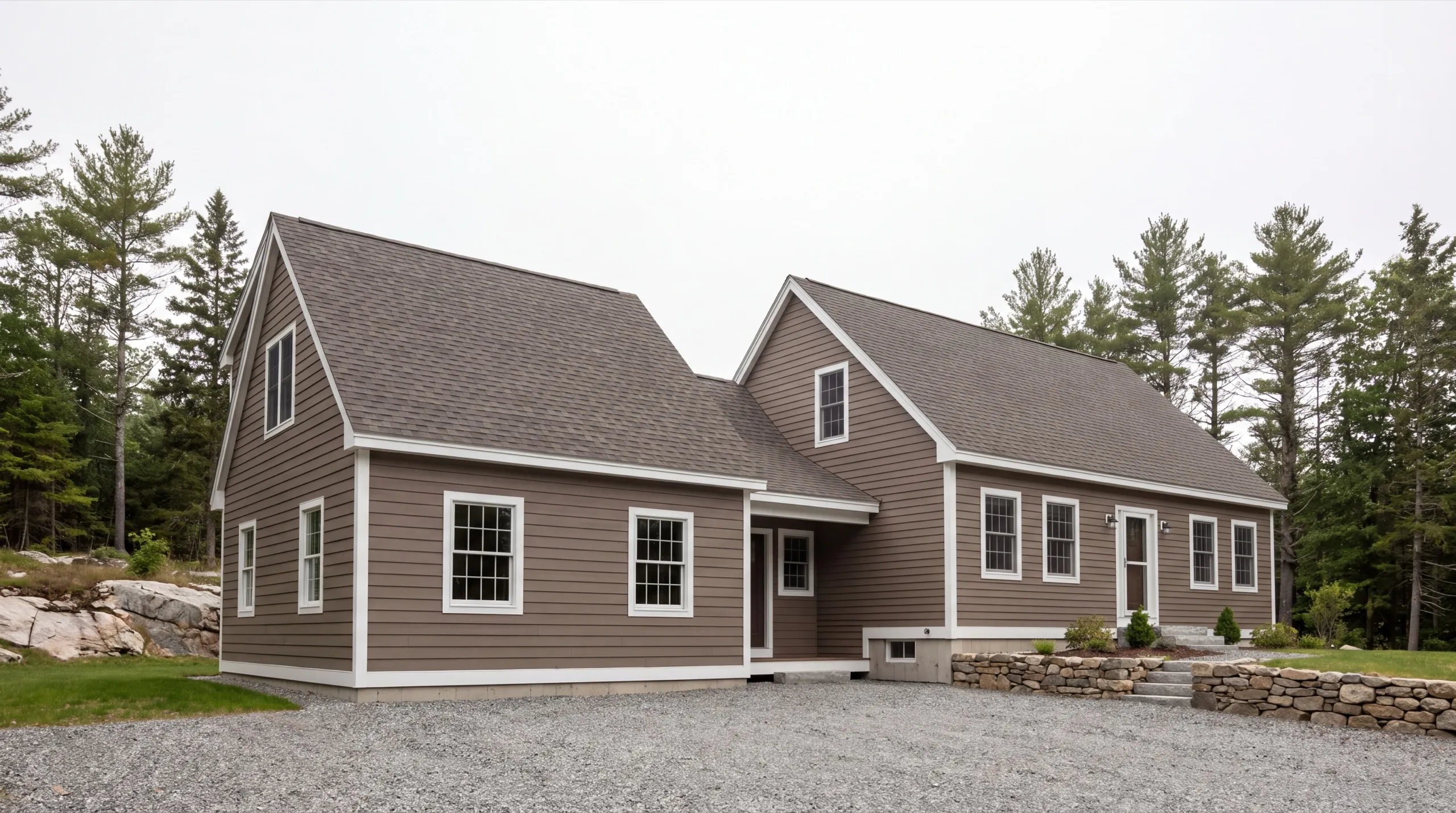
What else can we build for you in Central Maine?

Where is our shop?
Our shop in Augusta, ME
219 Capitol St. Ste. 8Augusta, ME 04330
What Types of Siding Do We Install?
Vinyl Siding Installation and Replacement
Vinyl has the lowest upfront cost. It’s a genuinely good product when installed correctly on the right wall. Correct installation means nailing loose in the slot so a thirty-foot run can expand in July and contract in January. Starter stays clear of grade, while every opening gets real head flashing instead of a bead of sealant. The Vinyl Siding Institute publishes the standard we follow. Vinyl struggles with impact, especially in cold weather. Below zero, it turns brittle. A mower-thrown stone or dropped limb can crack a panel that might survive the same hit on a warmer day. Our honest position: use vinyl on sheltered inland walls. Put something tougher where the weather lands. See how that choice plays out in West Gardiner or Winthrop.
Fiber Cement Siding Installation and Replacement
We recommend fiber cement for most Maine homes. On an exposed wall, it isn’t a close call. It stays stable in cold weather and holds paint for years. It can also take a hit without cracking. James Hardie is the product line we install most. Its narrow exposures suit older New England facades, where a wide modern panel often looks wrong. Here’s the tradeoff. Fiber cement is heavy and slow to cut. Labor therefore costs more, typically bringing the estimate to roughly twice that of a comparable vinyl job. It must also be installed according to the manufacturer’s instructions. Those instructions specify the fastening schedule and clearance at grade, along with gapped butt joints that are properly flashed. Installing it like vinyl voids the warranty. It hurts performance too. Coastal work in Wiscasset is where the difference shows up fastest.
Full Re-Sides vs. Repairs and Partial Replacements
A repair makes sense when the damage came from a single event, such as a storm or impact. The same applies to one section punctured by a ladder. We price those as small repairs instead of turning them into whole-house jobs. A full re-side makes sense when the damage forms a pattern. If the same failure appears on two or more elevations, the cause remains in place. Covering it starts the clock again. We won’t compromise on sheathing. If a screwdriver sinks into the board or plywood behind your siding, that wall comes off. New siding cannot fix wet sheathing. Partial replacement works when certain walls have taken decades more sun or driven rain than the rest of the house. Before you commit, we’ll tell you plainly how close the color match will look.
What Siding Services Do We Offer?
Our siding services cover the wall from the sheathing outward. One crew stays responsible from tear-off through the final piece of trim.
- Siding removal and old-material disposal
- House wrap and moisture barrier installation
- Vinyl siding installation and replacement
- Fiber-cement siding installation and replacement
- Wood/cedar siding installation
- Trim, soffit, and fascia replacement
Leave it alone and it can become one of the most expensive.
What's our process to replacing siding?
Get your free estimate.
We walk the whole exterior, check the fascia and the roof-to-wall junctions, and write a scope that names the wrap, the flashing, and the fasteners.
We strip and install.
Old siding off and hauled away, damaged sheathing replaced, new wrap and flashing on, then siding, trim, and soffit, with the walls dried in at the end of every day.
Final walkthrough.
You check every corner and window head with us, and we correct what is not right before we call it done.
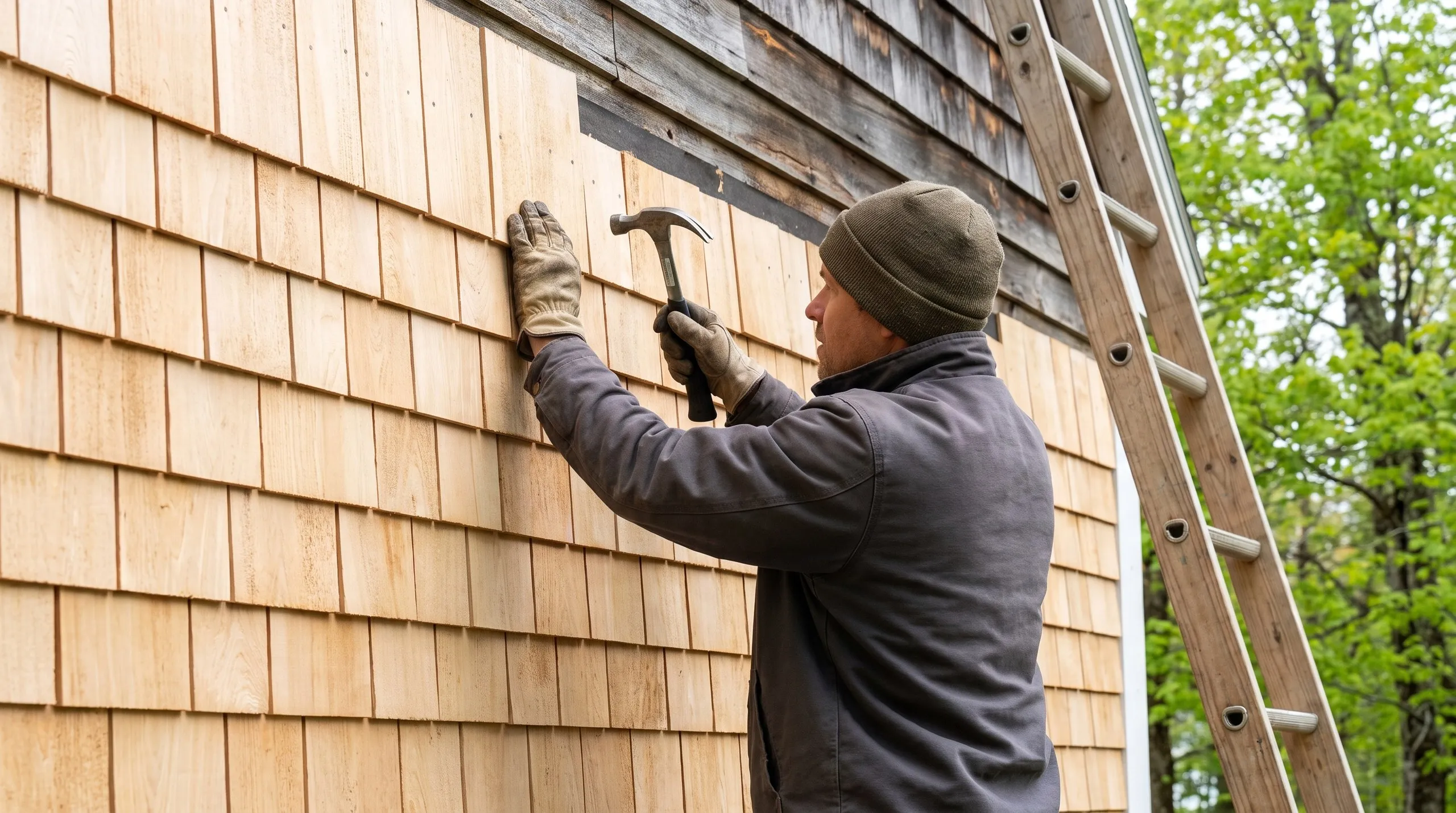
Is It Time to Replace Your Existing Siding?
Replace the existing siding when more than one wall tells the same story. One damaged section is a repair.
Chalking or cupping across three elevations means the existing siding is finished. So do loose panels across the same area.
Another reliable signal is a finish that won’t hold. If paint lifts within two or three years of proper preparation, moisture is coming from behind the surface.
Scraping and repainting won’t solve it.
Pay attention to what you feel indoors. A cold or drafty wall on the windward side usually points to failed or missing wrap, a common problem on homes sided before the mid-1980s.
Age alone proves nothing. We’ve removed thirty-year-old cedar from Maine houses and found it sound.
We’ve also removed eighteen-year-old vinyl that was completely finished.
We won’t install new siding over the existing material. That shortcut saves one day of labor, but it traps anything already wet inside the wall.
And the assembly can’t dry.
We find a lot of rot behind that shortcut.
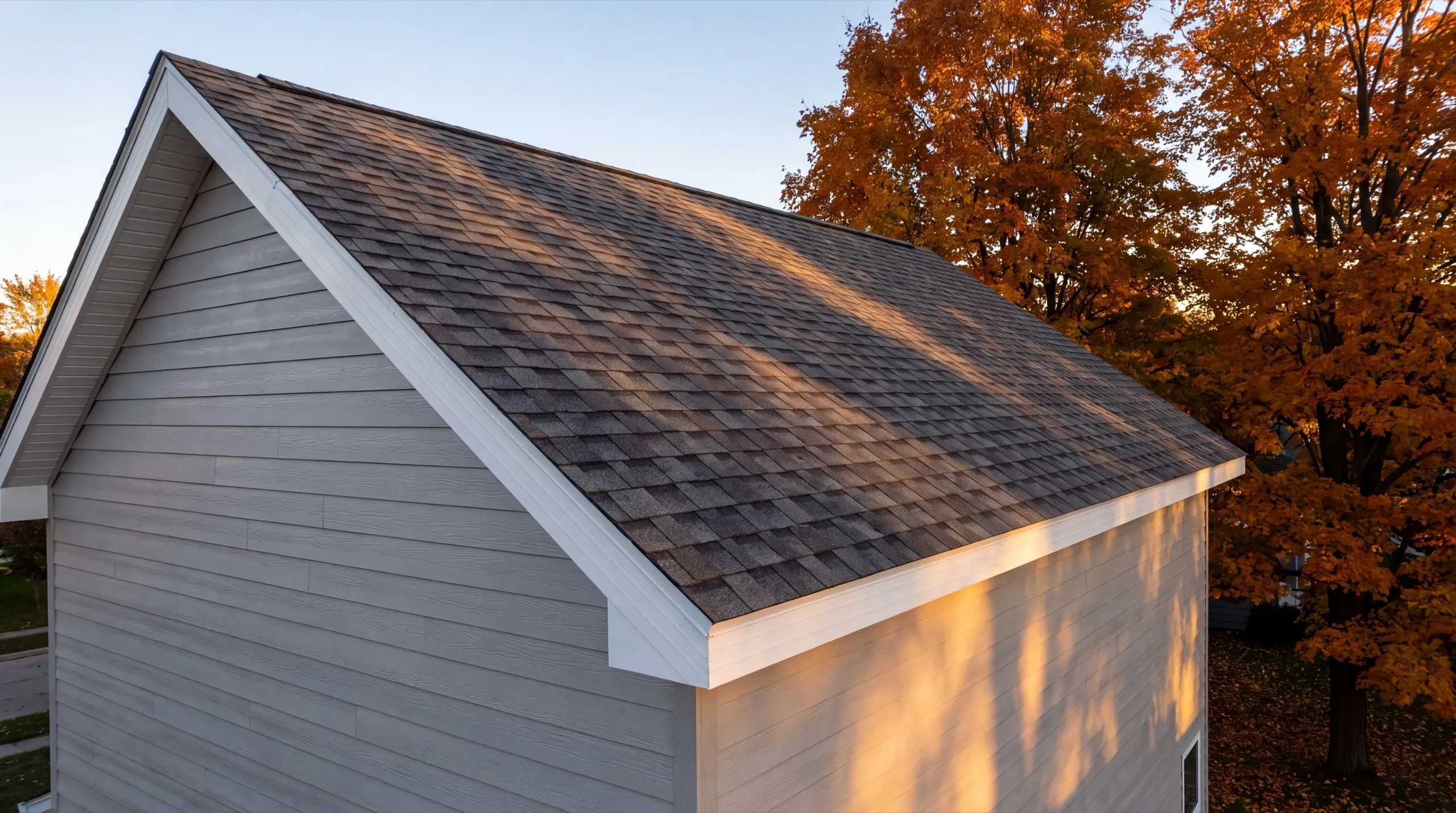
What Should You Look for in a Siding Contractor?
The first thing to look for in a siding contractor is a straight answer to two questions: are you replacing the house wrap, and are you installing kickout flashing. Both answers should be yes. Maine does not license general contractors, so specific questions about the hidden layer are the only real screening tool a homeowner has.
Because it gets torn during removal, and because what is under older siding is often felt or wrap that was lapped in the wrong direction to begin with. Reusing it saves a few hundred dollars on a job that lasts decades, which is the worst trade on the whole estimate.
It is the piece that kicks water out of a roof-to-wall junction and over the siding instead of into the wall. Where it is missing, every rainfall sends a stream of water into one spot behind your siding, and that single omission causes more rot than any material choice ever will.
Yes, and this is worth insisting on. Wrap, flashing, fastener type, and trim material should all appear in writing. A line that says "install new siding" can be met with whatever is cheapest on the shelf, and that is not dishonesty, it is vagueness that costs you the same.
Corrosion-resistant, always, and the manufacturer's specified type for the material. Salt air off the Sheepscot and the coastal rivers goes after the fasteners long before it touches the siding, and using standard hardware there voids most material warranties.
Two parties, and you should know which is which. The manufacturer covers the material and the contractor covers the workmanship, and manufacturer coverage generally depends on the installation following their published instructions. Get the workmanship terms in writing before you pay a deposit.
Ask how many jobs they are running at once and get your dates in writing. A crew split across four sites is a crew that opens your wall and disappears for a week, and an open wall is not something you want sitting through a rainy stretch. The National Association of Home Builders publishes general guidance on contracting practices worth reading before you sign anything.
How much does siding cost in Maine?
Siding in Maine starts around $10,000 for a vinyl re-side on a typical home. Full cedar can reach $40,000 and beyond. The bands below reflect averages from many quotes, not a price list.
| Material | Typical home size | Estimated range* |
|---|---|---|
| Vinyl siding | 1,800 to 2,400 sq ft home | $10,000 to $18,000 |
| Fiber cement siding | 1,800 to 2,400 sq ft home | $18,000 to $32,000 |
| Wood/cedar siding | 1,800 to 2,400 sq ft home | $22,000 to $40,000 |
Square footage, number of stories, access difficulty, and trim and flashing scope are what move a job inside these ranges.
What is the single biggest thing that changes the price?
Rot found behind the old siding, and nobody knows how much there is until a wall is open. We give you a band up front, a fixed price after the walk, and we tell you what we would do if we find soft sheathing before we find it rather than after.
Why does the number of windows matter more than the wall area?
Because trim is where the labor lives. A wall with six windows and a bay is mostly cutting, flashing, and casing work, while a long blank elevation goes up fast. Two houses of the same square footage are not the same job.
Who is actually running your job?
Seth Leichnitz owns this company and started in the trade doing the physical work himself. He went through Kennebec Valley Community College's sustainable construction program from 2018 to 2020, then spent years framing, managing, and estimating before starting Garage Builders Maine six years ago. He inspects the moisture barrier work himself on every job.
Frequently asked questions
Fiber cement, for most homes in this market. It handles freeze-thaw cycling and coastal salt air better than vinyl, and it does not need the recurring finish work cedar demands. Vinyl performs perfectly well on sheltered inland properties at a meaningfully lower upfront cost, and we will say so when that is your situation.
Usually, yes. Matching color and profile to existing siding is normal work, though an exact match on an older product sometimes is not possible because the line has been discontinued. We tell you that before we start rather than installing something close and hoping you do not notice.
In nearly every case, yes. Existing wrap gets damaged during removal, and replacing it is what actually protects the sheathing. This is the step most commonly skipped to hit a lower number and the one that costs the most later.
For coastal, high-wind, or full-sun exposure, yes without hesitation. For a sheltered inland property with a firm budget, vinyl is a reasonable value choice and we install plenty of it. A common middle path is fiber cement on the two hard elevations and vinyl on the sheltered ones.
Most full-home replacements run one to two weeks on site, and a large or two-story house with a lot of trim can reach three. Tear-off moves fast. Trim, flashing, and corners are where the time actually goes.
April through November. Deep winter is the wrong season because vinyl gets brittle enough to crack when it is cut and caulk and paint will not cure, and neither problem shows up until the following summer.
Indirectly, and the gain comes from the work underneath rather than the panel. Proper house wrap and air sealing done while the wall is open is where the improvement lives, and adding continuous insulation at the same time is the cheapest chance you will ever get at it.
Straight like-for-like siding replacement often falls outside a permit, but every town in our area sets its own rules and structural repair uncovered behind a wall does need one. Historic district or village character review can also apply in Gardiner, Hallowell, and Wiscasset. We confirm with the code office for your address before we start.
We work across twenty towns in Kennebec, Lincoln and Sagadahoc counties, from Augusta and Winthrop down through Gardiner and Richmond to Wiscasset. The town list above links to what a siding job actually looks like in each one, because exposure and permitting genuinely differ from town to town.
What are your next steps for siding?
Send us the address. We’ll walk the exterior and inspect the fascia, then check the flashing.